
The short answer: before a full house shows up for Thanksgiving, spend about 20 minutes walking your basement and crawl space. Sniff for musty air, test the sump pump, empty and set the dehumidifier, close up the crawl space, and clear the leaves out of your gutters and downspouts. That small effort keeps the guest room fresh and catches small water problems before a holiday rain turns them into big ones.
A crowded house makes a lot more moisture than you'd think. Pots simmering all day, extra showers, a running dishwasher, people breathing and the front door opening every few minutes all add humidity. In a Woodstock, Canton or Marietta home with a finished basement or a vented crawl space, that extra moisture has to go somewhere, and it usually shows up as a musty smell right when company arrives. Here's a quick checklist to run this weekend.

1. Do the sniff test (2 minutes)
Walk down the basement stairs, or open the crawl space door, with fresh nostrils.
- Earthy or musty: moisture is building up somewhere. Note where it's strongest.
- Sour or mildewy in one room: check closets, under rugs and behind furniture against outside walls.
- Rotten eggs or gas: don't hunt for it. Leave the house and call your gas utility from outside.
If the musty smell keeps coming back after you clean, that's a sign of an ongoing moisture source. Our post on why basement and crawl space mold keeps coming back explains what's usually behind it.
2. Test the sump pump (3 minutes)
Late fall rain in North Georgia can be steady and heavy, and a holiday weekend is the worst time to find out the pump quit.
- Make sure it's plugged in and the outlet has power. If a GFCI outlet keeps tripping, call an electrician rather than bypassing it.
- Slowly pour a bucket of water into the pit. The pump should kick on, empty the pit and shut off on its own.
- Go outside and check that the discharge line isn't clogged with leaves or pointed back toward the house.
- Listen for grinding, rattling or a pump that runs and runs without moving water.
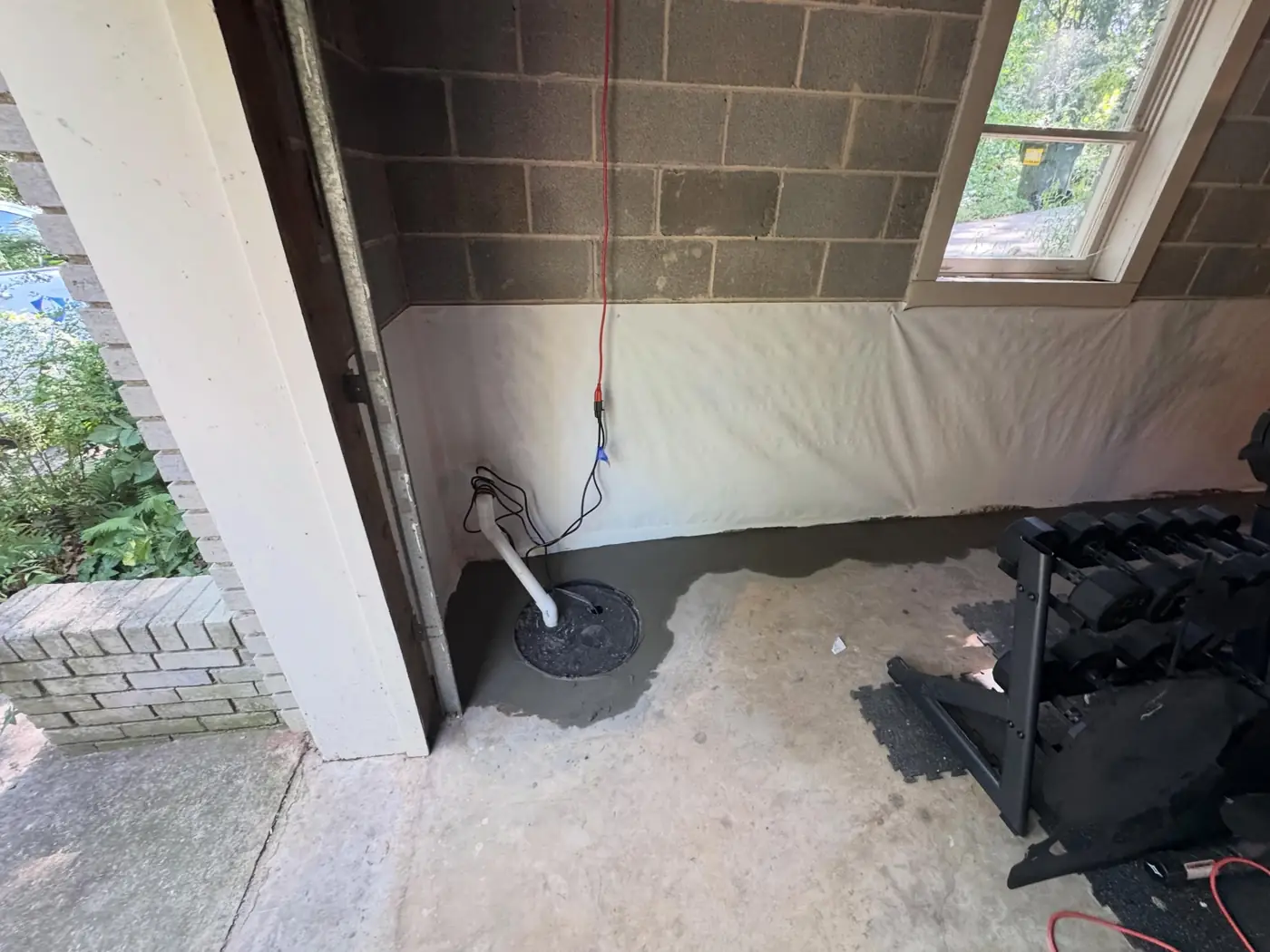
If anything seems off, unplug the pump before you reach into the pit. For a longer list of warning signs, see is your sump pump ready for the next Atlanta storm.

3. Empty and set the dehumidifier (3 minutes)
A full bucket means the unit stopped working, sometimes days ago. Empty it, wipe it out, and check that the filter isn't caked with dust. If your dehumidifier drains to a hose or pump, make sure the line is clear and not kinked.
Then look at the setting. Many units get turned down or off once summer ends, but a full house brings that humidity right back. Set it to a comfortable middle setting and leave it running through the weekend. Close basement windows and doors so it isn't trying to dry out the whole neighborhood.
If you're emptying a bucket every day, or the unit runs nonstop and the air still feels damp, it's probably undersized or fighting a water problem. A properly sized, self-draining unit is what our basement and crawl space dehumidification service is built around.
4. Check the crawl space door and vents (3 minutes)
If you have a crawl space, take a flashlight and look from the access door. You don't need to crawl in.
- Is the door closed and latched? A door left open or knocked loose lets in damp air and critters.
- Is the plastic on the ground in place, or torn and bunched up?
- Is there standing water, wet insulation hanging down, or a strong musty smell?
- Are foundation vents blocked by leaves or mulch, or broken open?
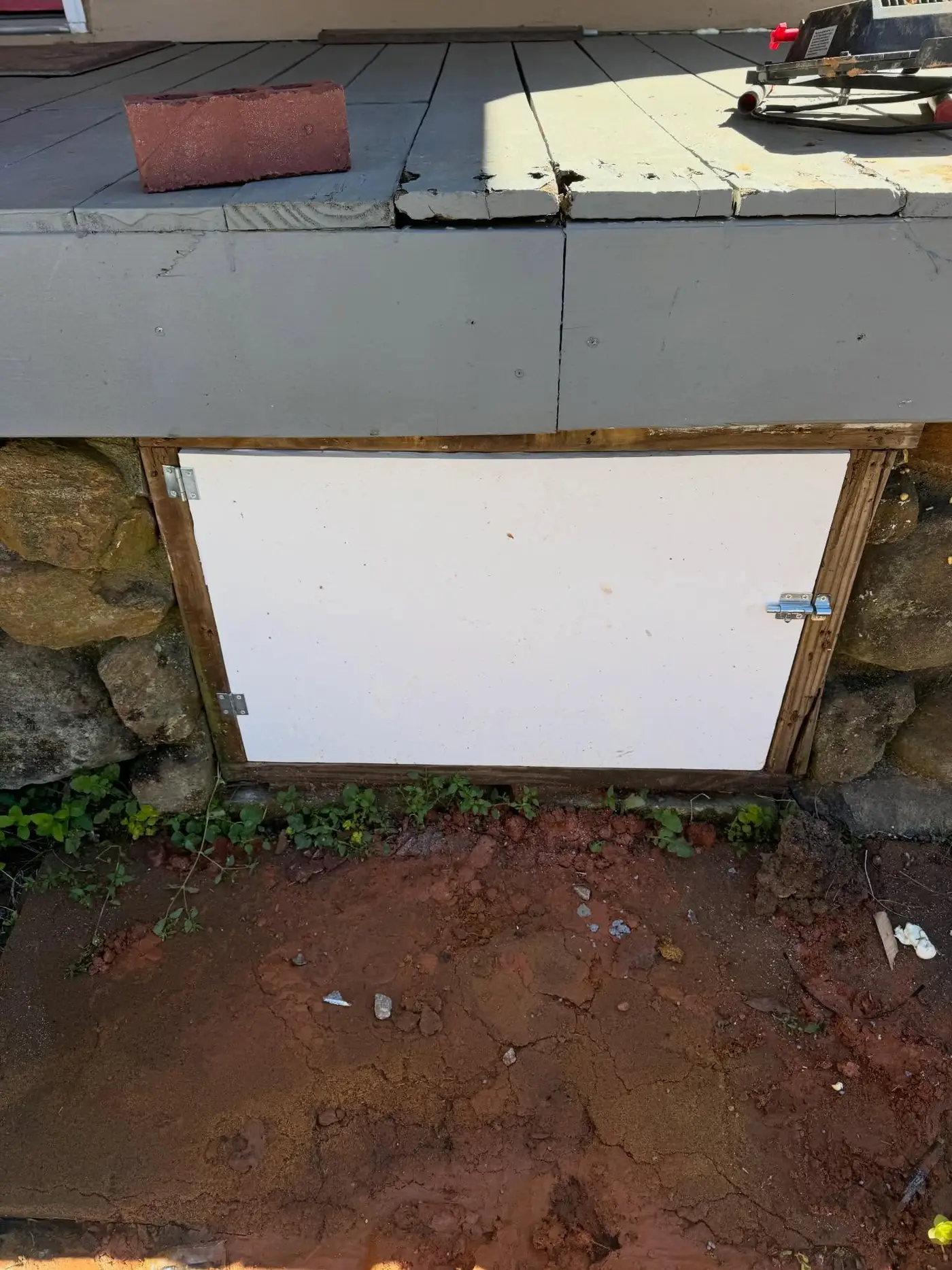
If the space looks wet or the plastic is a mess, our guide to whether your home needs crawl space encapsulation is a good next read.
5. Clear gutters and downspouts (5 minutes)
By late November, Cherokee and Cobb County yards are covered in leaves, and those leaves end up in the gutters. Clogged gutters overflow right along the foundation, which is exactly where you don't want water.
- Scoop out what you can reach safely from the ground or a stable ladder. If the roof is steep or two stories up, hire it out.
- Make sure each downspout empties several feet from the house, not into a flowerbed against the wall.
- If you have underground drains, check that the outlets aren't buried in leaves.
Downspouts that dump next to the foundation are one of the most common reasons basements and crawl spaces get wet. Here's how underground downspouts protect your home from heavy winter rains.
6. Make the basement guest room comfortable (2 minutes)
If Grandma or the college kids are sleeping downstairs, give the room a once-over.
- Pull back the bed linens. Do they feel damp or smell stale? Wash stored bedding before guests arrive.
- Look along the bottom of exterior walls and behind the bed for dark spots or bubbling paint.
- Run a fan or the HVAC to keep air moving, and keep the door open during the day.
7. Glance at the laundry and water heater area (2 minutes)
With extra towels and sheets, the washer will be busy. Check the hoses for bulges or drips, and make sure the dryer vent is connected and venting outside, not into the basement.
Look at the floor around the water heater for puddles, rust or mineral crust. If you see water coming from the tank itself or the valves, call a plumber. If it's a gas water heater and you smell gas, leave and call the gas utility.
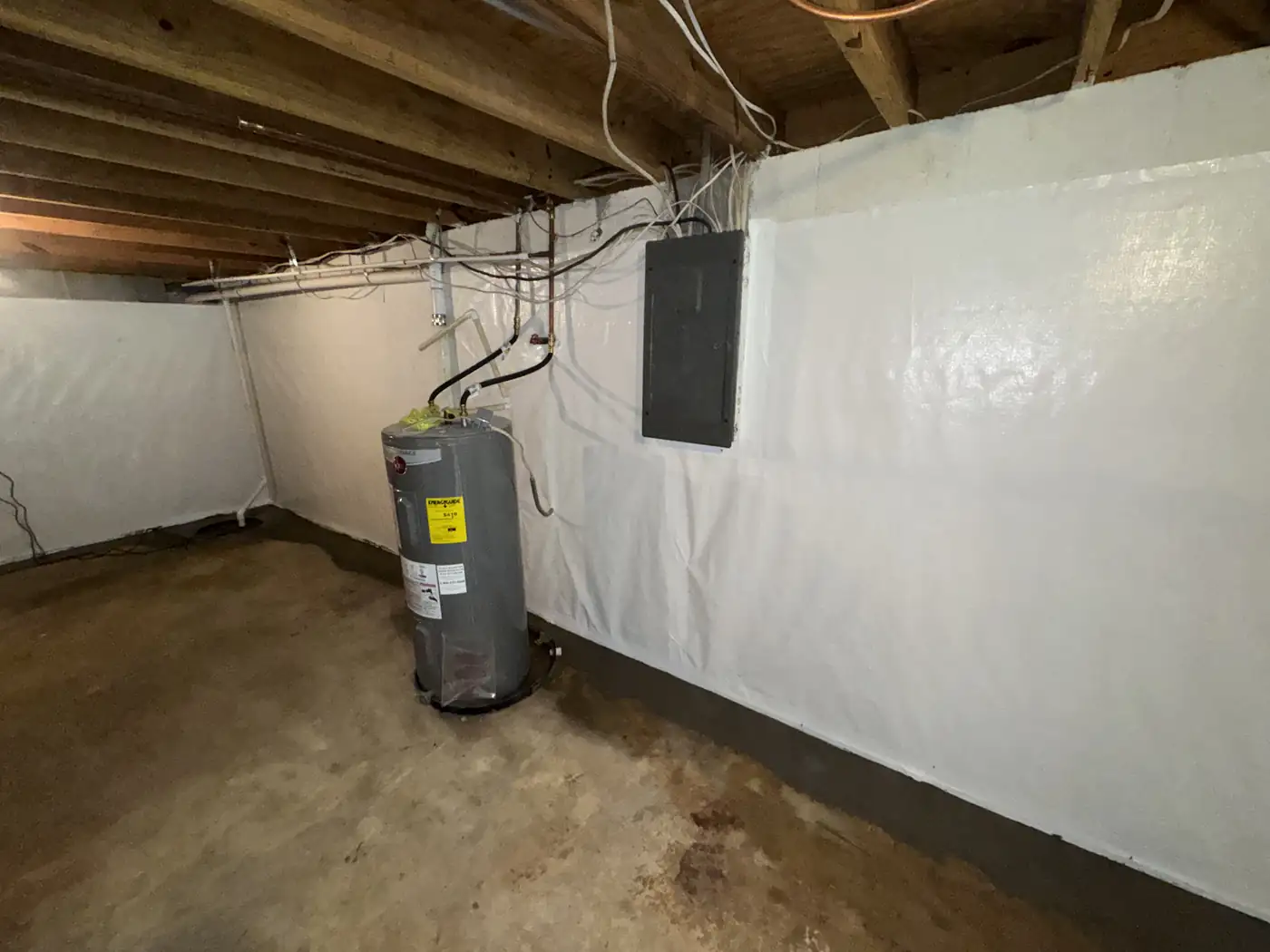
Where to look for warning signs
As you walk through, watch for these clues that water is getting in:
- White, chalky crust on block or concrete walls (efflorescence)
- Damp or dark lines where the wall meets the floor
- Cracks in walls or floors that look wider than you remember
- Rust on nails, tack strips or metal shelving
- Peeling paint, warped baseboards or carpet that feels damp
- Sagging or bouncy floors above the crawl space
When to book an inspection after the holiday
A lot of this checklist is quick maintenance you can handle yourself. But some things point to a bigger moisture or water problem, and they're worth having looked at once the leftovers are gone:
- The musty smell comes back no matter how much you clean or air things out.
- Water shows up on the floor after rain, or the sump pump runs constantly.
- The dehumidifier can't keep up.
- You see standing water, mold or sagging framing in the crawl space.
- Wall cracks are growing, or the walls are bowing.
Depending on what's going on, the fix could be basement waterproofing, crawl space encapsulation, better drainage outside, or simply a dehumidifier that's the right size for the space.
Enjoy the holiday, then let us take a look
However you celebrate, we hope your house is full of good food and good company this Thanksgiving. If your 20-minute check turned up something you're not sure about, we offer a free inspection with a written quote, across Woodstock, Canton, Cumming, Kennesaw, Acworth, Alpharetta, Roswell and the rest of North Georgia and Metro Atlanta. We'll show you what we find, explain your options in plain English, and leave the decision to you.
Call or text (470) 574-8323 to get on the schedule after the holiday.