
If you've lived in North Georgia longer than a week, you know our seasons don't follow the calendar. They go something like this: Summer. Still Summer. Fake Fall (one glorious 48° morning). Second Summer. Third Summer. Actual Fall (a long weekend in November). Then Winter, Fool's Spring, and Pollen.
Somewhere in late October you're digging the hoodie out of the closet in Woodstock at 7am and running the AC by 3pm. You can handle it. Your crawl space and basement have a harder time, because they can't change clothes. Here's what the weather whiplash is doing under your house, and the easy stuff you can check this weekend.
Why weather whiplash makes your crawl space sweat
Think about a glass of sweet tea on the porch in August. The glass is cold, the air is warm and full of moisture, and within a minute the outside of the glass is dripping. That's condensation. Warm air holds a lot of water, and when it touches something cooler, it drops that water right there.
Your crawl space is full of things that act like that glass: ductwork, water pipes, floor joists, block walls and the ground itself. During a cold snap they cool off. Then Second Summer rolls back in with a warm, sticky afternoon, humid air drifts in through the vents and the gaps around the access door, and everything down there starts sweating. A traditional vented crawl space basically breathes Georgia weather in and out all day.
A day or two of that isn't a crisis. Weeks of it, every fall and every spring, is how insulation ends up sagging, wood goes soft and that musty smell moves upstairs.
5 things fake fall does under your house
1. Your ducts and pipes start sweating
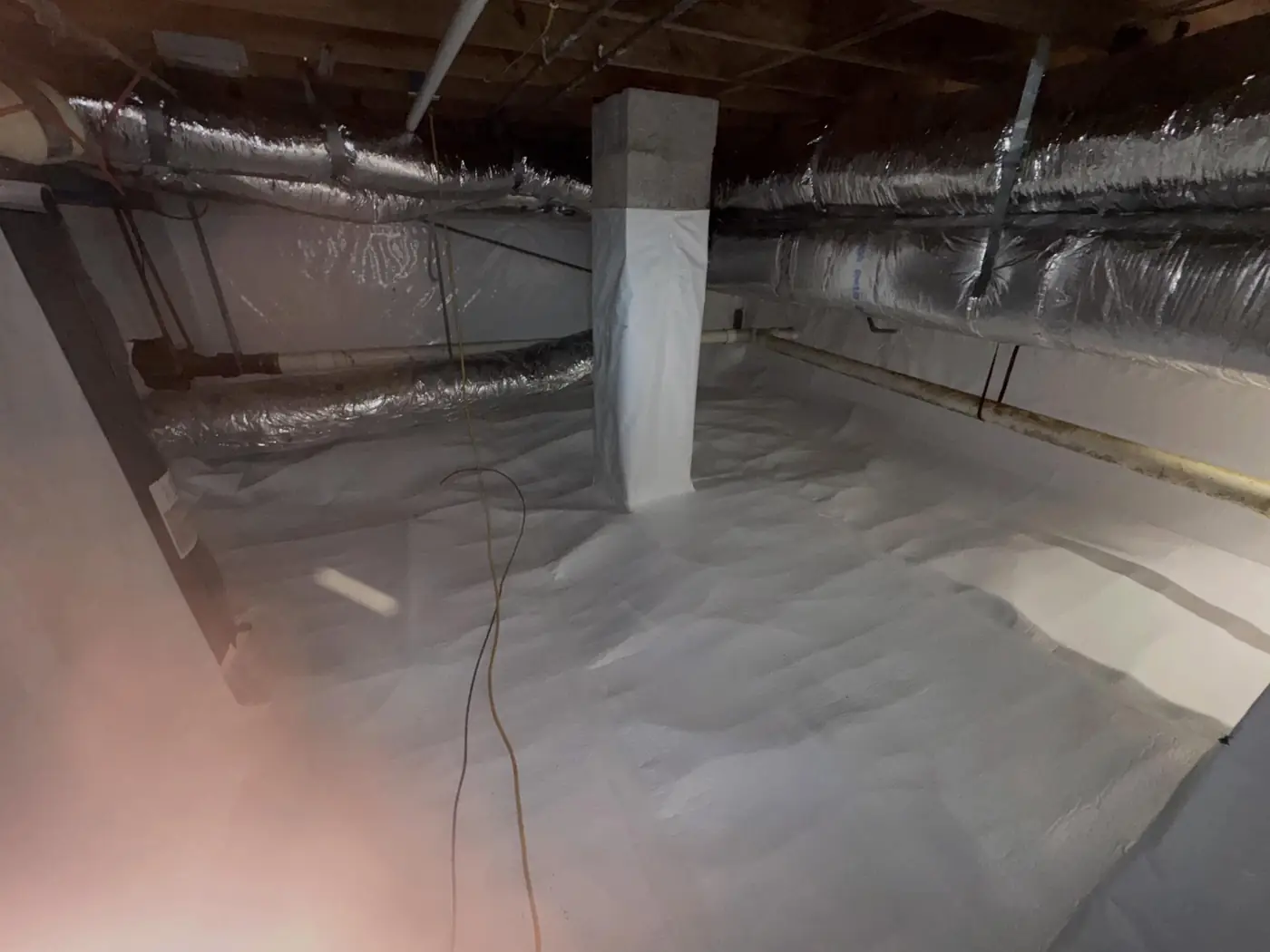
Ductwork and pipes are some of the first things to drip. Water drips onto the insulation and the vapor barrier (if there is one), and wet insulation stops insulating. If you see beads of water on ducts or rust stains on metal straps, the air down there is too humid. A dehumidifier sized for the space fixes the cause instead of the symptoms.
2. The musty smell comes back when the heat kicks on
The first time you switch the thermostat to heat, warm air rises and leaks out the top of the house, and new air gets pulled in from the bottom to replace it. A lot of that air comes up from the crawl space or basement. If there's damp wood, wet insulation or mold growing down there, you'll smell it in the living room. If "fall smells like the crawl space" is a tradition at your house, that's your sign.
3. Your sump pump wakes up from its summer nap
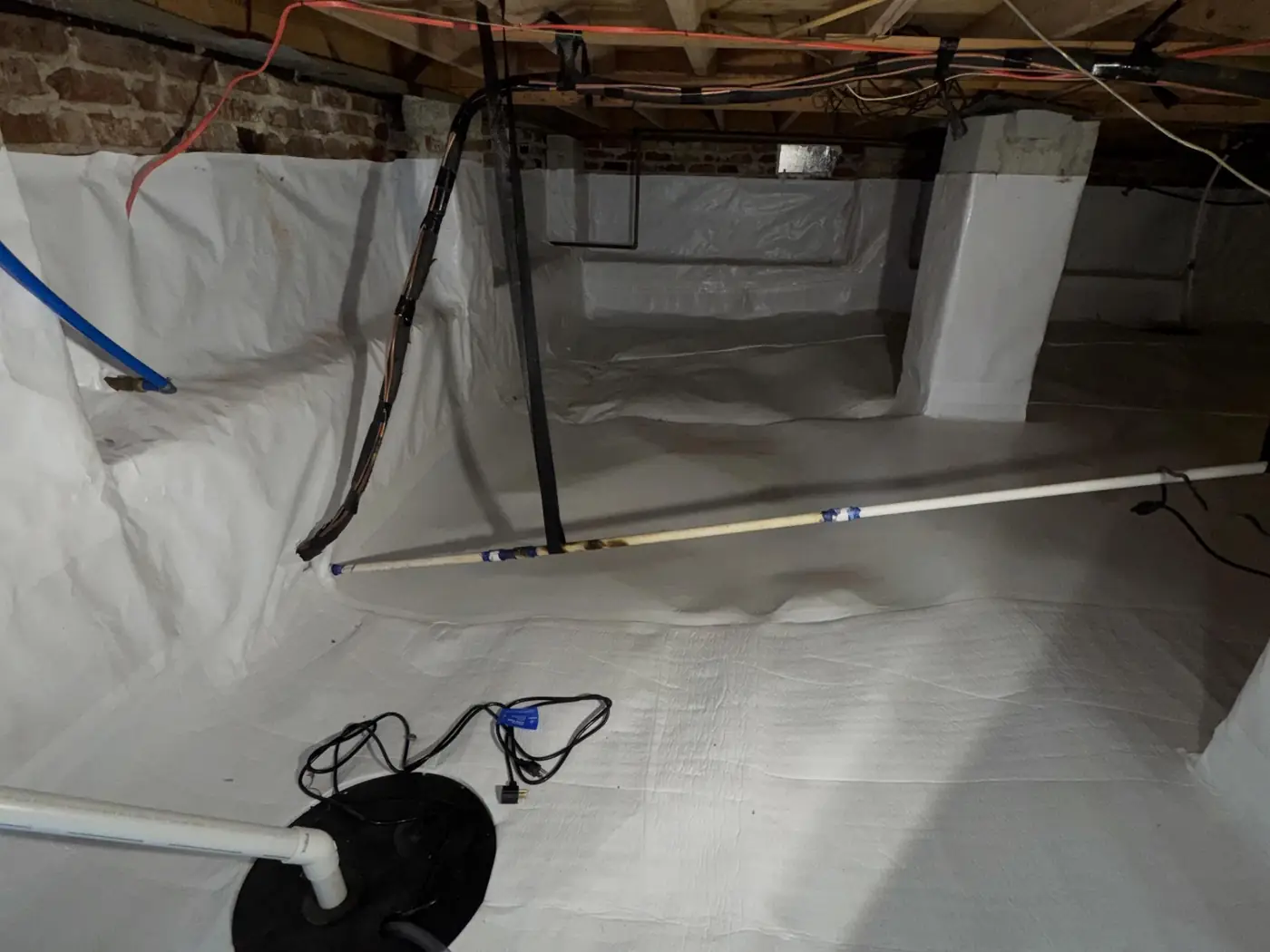
Late summer is often dry, so a sump pump can sit for weeks without running. Then a fall front or the leftovers of a tropical storm dumps inches of rain in a day, and the pump has to work instantly. Pumps that have been idle are the ones that stick. Give yours a test before it matters (there's a how-to in the checklist below), and read our guide to sump pump warning signs if anything sounds off. If water is already getting in, our basement waterproofing and drainage systems move it to the pump before it reaches your floor.
4. Georgia clay does the cha-cha
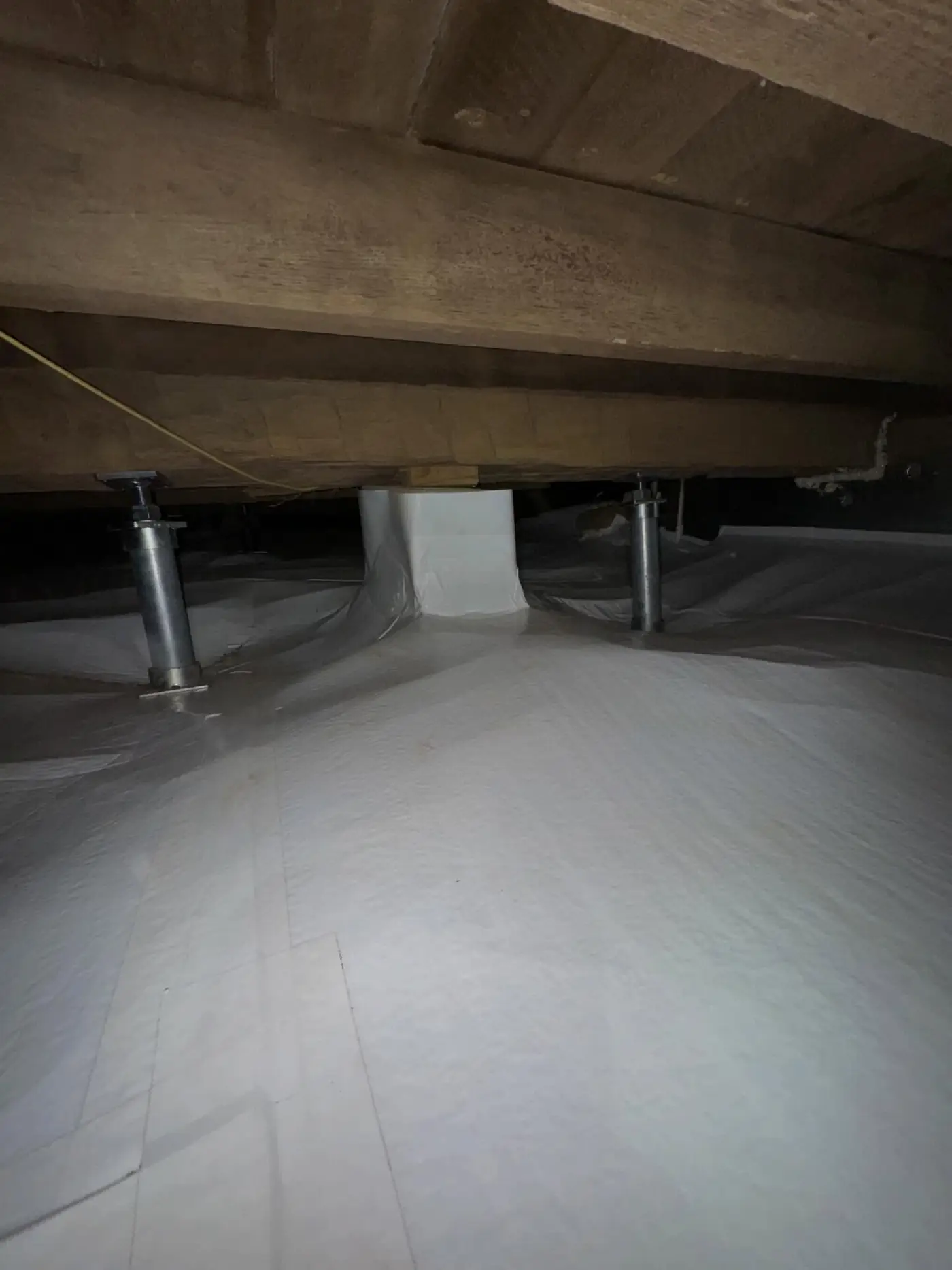
Our famous red clay swells when it gets wet and shrinks when it dries out. A dry stretch followed by heavy fall rain means the soil around your foundation is moving in and out. Over the years that movement can open cracks, shift piers and leave floors uneven. Watch for new cracks in block walls, doors that suddenly stick or won't latch, and floors that feel bouncy or sloped. Those are worth a look from someone who does structural stabilization, before a small problem gets bigger.
5. Falling leaves turn your gutters into bird baths
Leaves clog gutters right as the fall rain shows up. Clogged gutters overflow, and all that roof water lands right next to your foundation, which is exactly where you don't want it. Short downspouts that dump water a foot from the house cause the same trouble. Underground downspouts carry it well away from the house so it can't soak the soil against your walls.
Your 15-minute fake fall checklist
No tools, no crawling around for an hour. Grab a flashlight and a bucket.
- Clean the gutters after the leaves drop, and make sure every downspout sends water at least a few feet from the house.
- Test the sump pump. Slowly pour a bucket of water into the pit. It should start, empty the pit and shut off on its own.
- Peek into the crawl space. Look for sweating ducts, damp or sagging insulation, puddles, or white fuzz on the wood.
- Do the sniff test. Musty at the crawl space door or the basement stairs means there's moisture somewhere.
- Get a $10 humidity meter. Leave it in the basement or just inside the crawl space for a day. If it reads above about 60%, mold and wood rot are happy.
- Check the doors. Interior doors that suddenly stick or won't latch can mean the house is moving.
- Close the crawl space door. If it doesn't seal, it's letting outside air in all day.
If everything checks out, enjoy your three days of actual fall. If anything doesn't, keep reading.
How to stop fighting the weather for good
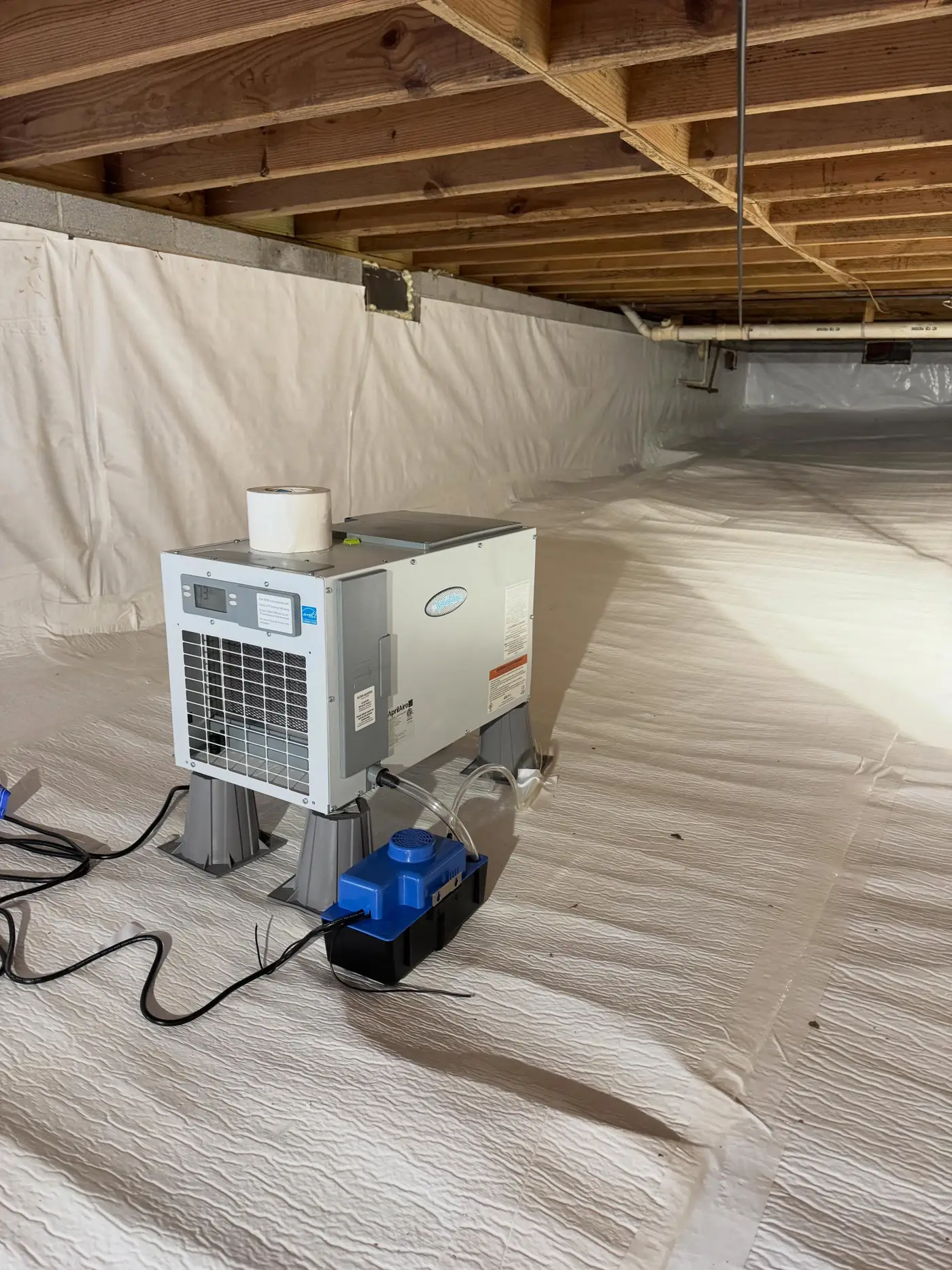
The reason Georgia's weather mood swings hit crawl spaces so hard is that most of them are open to the outside. Crawl space encapsulation changes that. We seal the ground and walls with a heavy vapor barrier, close off the vents and doors, and add a dehumidifier so the air stays dry whether it's 40° or 90° outside. No more sweating ducts, no more musty fall smell.
For example, on a Kennesaw home we installed 130 linear feet of drainage with a sump pump, encapsulated 1,200 square feet of crawl space with an Aprilaire dehumidifier, and weather-stripped the crawl space door so it actually seals. In Douglasville, moisture was causing mold, so we encapsulated the space and added a dehumidifier to keep humidity under control. You can see both jobs, and more, on our projects page.
From Ellijay to Smyrna, the swing hits a little differently
Up in the mountains around Ellijay and Jasper, the cold mornings usually show up sooner and the day-to-night swing is bigger, so crawl spaces see more condensation earlier in the season. Closer to home in Woodstock, Canton, Acworth and Cartersville, it's the back-and-forth of Second Summer that keeps things damp. Down in Marietta, Roswell, Alpharetta and Cumming, humid fall afternoons hang around longer than anyone wants. Different towns, same problem: humid air meeting cool surfaces under your house.
We're based in Woodstock and work across Cherokee, Cobb, Forsyth, Fulton, Bartow, Pickens, Gilmer, Paulding and the rest of North Georgia.
Let us take a look before Actual Fall shows up
If your checklist turned up something, or you just want a second set of eyes, we'll come out for a free inspection. We'll show you where the moisture is coming from, explain your options in plain English and give you a written quote. Call or text (470) 574-8323. If the fix is bigger than you planned, financing is available.
Now go enjoy that pumpkin spice something while it's still under 80.