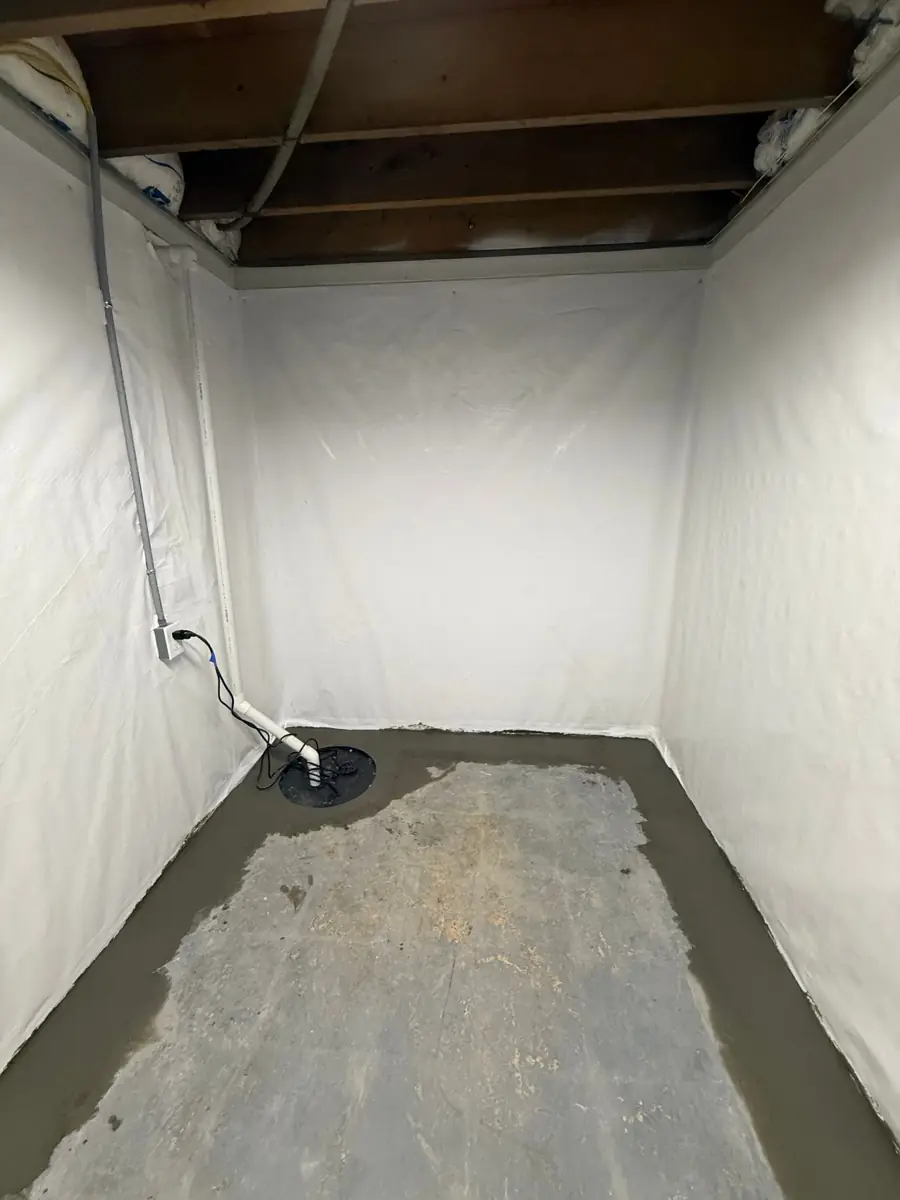
Warning Signs Your Sump Pump May Not Be Ready to Protect Your Home
A sump pump is easy to forget when it is working properly. It usually sits quietly in a basin at the lowest part of the basement, waiting for water to collect. During heavy rain, the system activates and moves that water away before it can rise into the living or storage areas of the home.
For homeowners in Atlanta, Marietta, Kennesaw, and surrounding Metro Atlanta communities, that quiet piece of equipment can play an important role during periods of prolonged or intense rainfall. The problem is that many people do not think about the condition of the pump until water is already collecting where it should not.
A sump pump is only one part of a complete basement waterproofing system. Water may first be collected through an interior drainage channel or another moisture-management feature before it reaches the basin. The pump then removes the collected water through a discharge line. If any part of that process stops working, the basement may be left without the protection the homeowner expects.
One of the clearest warning signs is a pump that does not start when water rises in the basin. This may happen because the float switch is stuck, the electrical connection has failed, the motor is damaged, or debris is preventing the system from operating correctly.
The opposite problem can also occur. A pump that runs constantly may be struggling to keep up with incoming water, operating with a stuck switch, or failing to remove water through the discharge line. Continuous operation places additional wear on the motor and should not be ignored.
Warning signs that your sump pump may need professional attention include:
- The pump does not activate as water rises in the basin
- The motor runs continuously without shutting off
- The system starts and stops repeatedly within a short period
- Water remains in the basin after the pump has operated
- The pump makes grinding, rattling, humming, or vibrating noises
- Rust, corrosion, or visible deterioration appears on the equipment
- Musty odors are noticeable around the sump area
- The pump appears to move less water than it did previously
- The system is older and has not been inspected in several years
Noise can provide useful clues. A brief, steady operating sound is normal when the pump activates. Loud rattling may indicate that a component is loose, while grinding can point to worn internal parts or debris near the impeller. A humming motor with little or no water movement may mean the pump is receiving power but cannot operate effectively.
Homeowners should also watch the water level in the basin. Some water may remain after the pump shuts off, depending on the system design. However, the level should generally fall as the pump operates. If it stays high, rises quickly again, or never seems to move, the system may have a blockage, damaged pump, switch problem, or discharge concern.
Frequent cycling can be another warning sign. A pump that turns on and off every few seconds may be incorrectly positioned, improperly sized, or affected by a faulty float switch. Repeated short cycles can wear out the motor more quickly and may prevent the system from handling water efficiently.
It is also possible for the motor to run while the system fails to move enough water. A clogged intake, damaged impeller, blocked discharge line, or weak motor can reduce performance without completely stopping the pump. Hearing the equipment operate does not automatically mean the basement is fully protected.
The following symptoms deserve prompt professional evaluation:
- Water rising close to the top of the basin
- A pump that will not start during a test
- Repeated loss of power or tripped electrical protection
- Water leaking around the pump or discharge connection
- A discharge line that appears loose, blocked, or damaged
- A strong musty smell or visible moisture around the sump area
Waiting until a major storm is underway is the worst time to discover that the pump has failed. Heavy rainfall can bring water into the system quickly, leaving little time to arrange service before the basin overflows. A pre-storm inspection can identify worn parts, improper operation, or installation concerns while there is still time to correct them.
Homeowners should avoid assuming that an older pump is dependable simply because it worked during the last storm. Mechanical equipment changes over time. Corrosion, debris, wear, electrical issues, and repeated cycling can all affect performance between one season and the next.
A professional inspection can determine whether the problem is limited to cleaning or adjustment, whether a component needs repair, or whether the pump should be replaced. The goal is to confirm that the system is prepared to remove water when the next period of heavy Atlanta rain arrives.