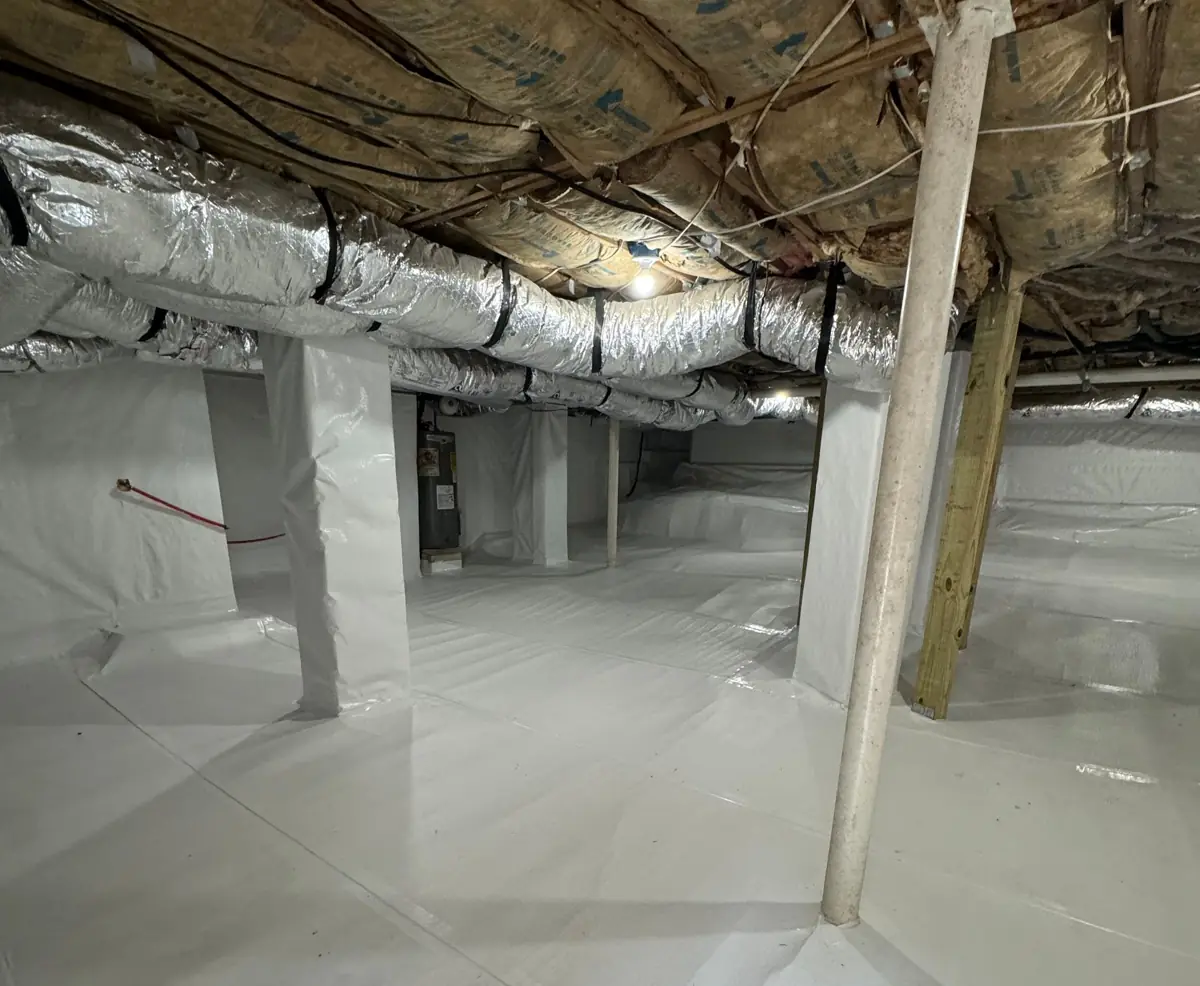
Why Mold Keeps Showing Up in Damp Areas of Your Home
Mold in a basement or crawl space is rarely just a surface problem. In many homes, visible growth is a sign that excess moisture has been present long enough to create the right conditions for mold to develop. For homeowners in Atlanta, Woodstock, and throughout North Georgia, humid weather, heavy rain, foundation seepage, and damp crawl spaces can all contribute to recurring moisture problems below the main living areas of the home.
One of the biggest frustrations for homeowners is seeing mold return after it has already been cleaned. That usually happens because the visible growth was addressed, but the underlying moisture source remained. If the basement continues to take on water after storms or the crawl space stays humid for long periods of time, mold can continue to find favorable conditions.
Basements and crawl spaces are especially vulnerable because they tend to stay cooler, receive less natural airflow, and sit close to the ground. Moisture can enter through foundation walls, exposed soil, plumbing leaks, poor drainage, or humid outside air. Once that moisture becomes trapped, the area may stay damp even when the rest of the house feels comfortable.
Common Warning Signs of Basement or Crawl Space Mold
Mold is not always obvious at first. In some cases, homeowners notice an odor long before they see visible growth. In others, signs of excess humidity or damp building materials may appear before mold becomes noticeable.
- Persistent musty odors: A stale or earthy smell can indicate ongoing moisture and microbial growth.
- Visible discoloration: Dark, green, white, or other unusual patches on wood, insulation, walls, or other surfaces should be investigated.
- Damp insulation: Wet or sagging insulation in a crawl space can point to excess humidity or water intrusion.
- High humidity: A basement or crawl space that consistently feels damp or muggy may have a moisture-control problem.
- Condensation: Moisture on pipes, ductwork, walls, or other cool surfaces can be a sign that humidity levels are too high.
- Recurring dampness after rain: Water or moisture that appears during storms may indicate drainage or foundation seepage issues.
- Mold that returns after cleaning: Recurring growth strongly suggests that the underlying moisture source has not been corrected.
These signs do not always mean the entire space has a severe mold problem, but they do signal that the area should be evaluated for moisture. The sooner the source is identified, the easier it may be to prevent the problem from spreading or returning.
For homeowners searching for basement mold treatment in Atlanta, GA or crawl space mold solutions in North Georgia, the first step should be understanding why the space is staying damp. Mold treatment becomes much more effective when moisture control is addressed at the same time.