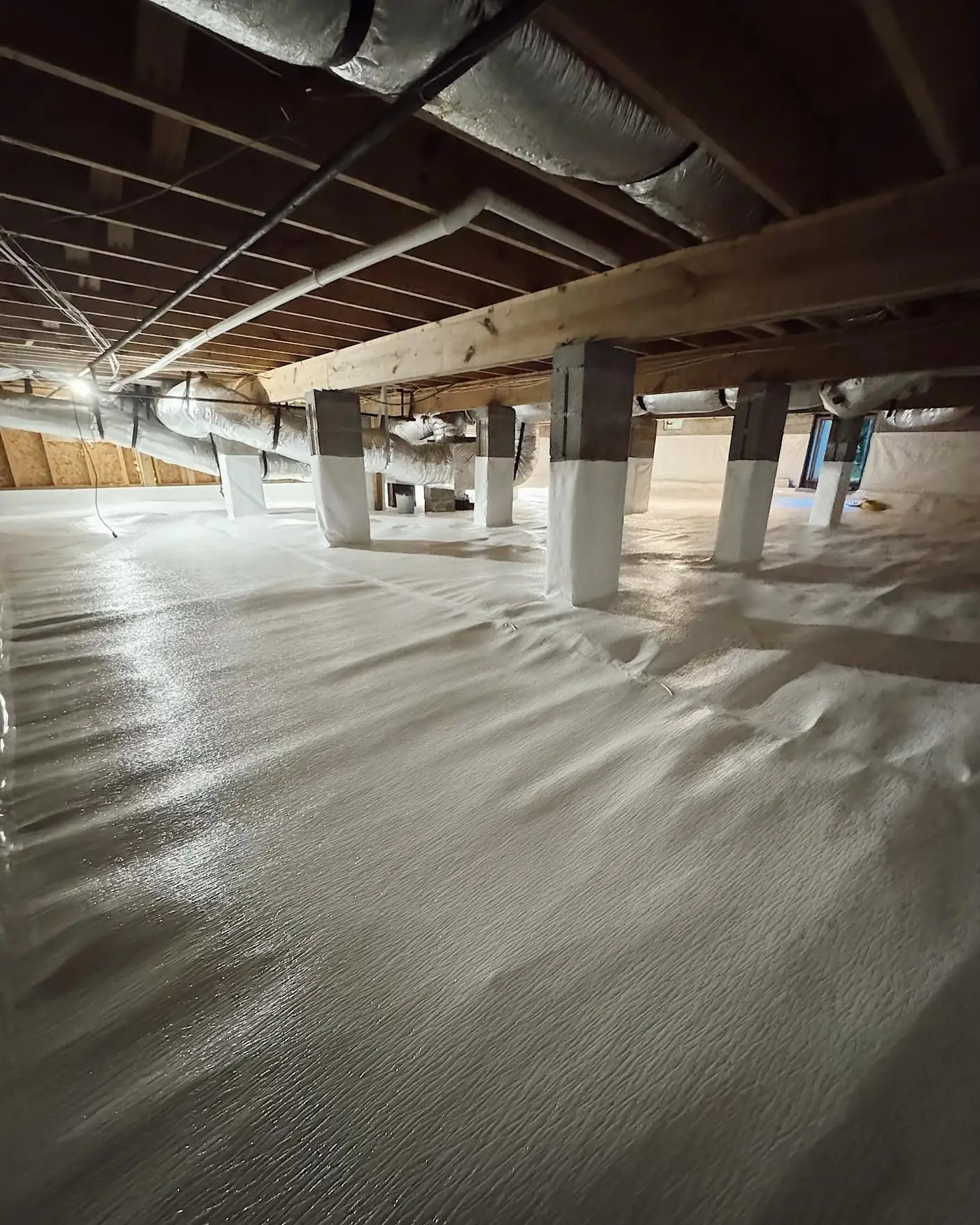
Most North Georgia homeowners don't think about their crawl space until something upstairs feels off. Maybe the house smells musty after a rain. Maybe the floors in the back bedroom feel a little soft, or the AC runs all summer and the air still feels sticky. Nine times out of ten, the cause is the same: a damp crawl space breathing humid Georgia air into the house.
Crawl space encapsulation is the fix we install most often, from Woodstock and Canton down to Marietta and Alpharetta. Here's how to tell whether your home needs it, what a proper job actually includes, and what to expect when a crew shows up.
Why North Georgia crawl spaces stay damp
Most older homes around here were built with vented crawl spaces. The idea was that outside air would flow through and dry things out. That works in a dry climate. In Georgia, the outside air is the problem. From May through September it's warm and loaded with moisture, and when it drifts into a crawl space and meets cooler ducts, pipes, framing and dirt, it turns into water.
Then there's the ground itself. Our red clay holds water for days after a storm and releases it slowly as vapor. A bare dirt floor, or a thin sheet of plastic with gaps, lets that moisture rise straight into the space. Add a few heavy rains and some downspouts dumping next to the foundation, and you have a crawl space that stays damp most of the year.
As warm air rises out of a house, it pulls air up from below to replace it. Whatever is in the crawl space air, including moisture, mold spores and that musty smell, ends up in your living room.
7 signs your crawl space needs encapsulation
1. A musty smell inside the house
This is the one we hear about most. If the house smells like a basement after rain, or the smell gets stronger when the HVAC kicks on, the crawl space is the first place to look.
2. Sticky, humid air even with the AC running
A damp crawl space keeps feeding moisture into the house, so your AC works harder to pull it out. If your indoor humidity sits above about 60% in summer, something is adding water.
3. Sweating ducts or pipes
Beads of water on ductwork, dripping pipes or rust on metal straps mean humid air is hitting cool surfaces. That water lands on your insulation and your floor framing.
4. Sagging or wet insulation
Fiberglass batts that are hanging down, falling out or dark and heavy have soaked up moisture. Wet insulation doesn't insulate, which is part of why the floors feel cold in winter.
5. Mold or white fuzz on the framing
Dark spots or white, fuzzy growth on joists and subfloor is a sure sign the space has been damp for a while. Our mold treatment takes care of what's there, and encapsulation keeps it from coming back.
6. Soft, bouncy or uneven floors
Years of moisture weaken wood. If a floor feels spongy or has started to dip, the framing or supports underneath may need attention. We check for that during every inspection and handle it with structural stabilization when it's needed.
7. Bugs, rodents or standing water
Termites, roaches, camel crickets and mice all love a damp crawl space. Standing water after storms is its own red flag, and it needs to be drained before the space is sealed.
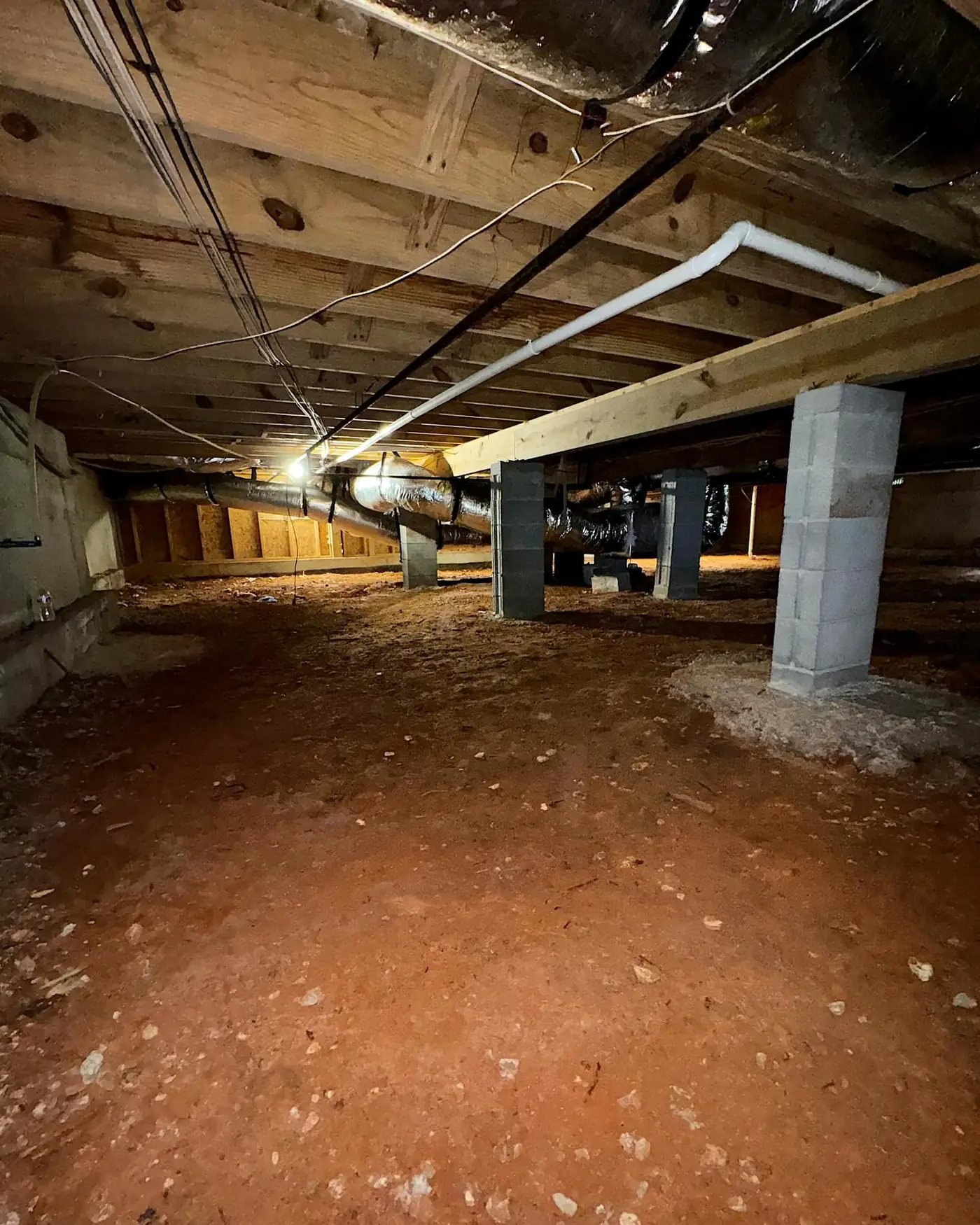
If you're seeing two or more of these, it's worth having someone look. Even one, like a musty smell that won't go away, usually means the crawl space is damper than it should be.
What a proper encapsulation job includes
"Encapsulation" gets used loosely, so it helps to know what you're paying for. A complete job seals the crawl space off from outside air and ground moisture, then keeps the air inside it dry. Here's what that looks like on one of our jobs:
Inspection and cleanup
We start by crawling the whole space. We look at moisture levels, the condition of the wood, insulation, any mold and any signs of water coming in. Old plastic, debris and failed insulation come out before anything new goes in.
Drainage first, if water gets in
Sealing a crawl space that floods just traps the water. If water comes in during storms, we fix that first with interior drainage and a sump pump, and often with underground downspouts to move roof water away from the foundation.
A heavy, sealed vapor barrier
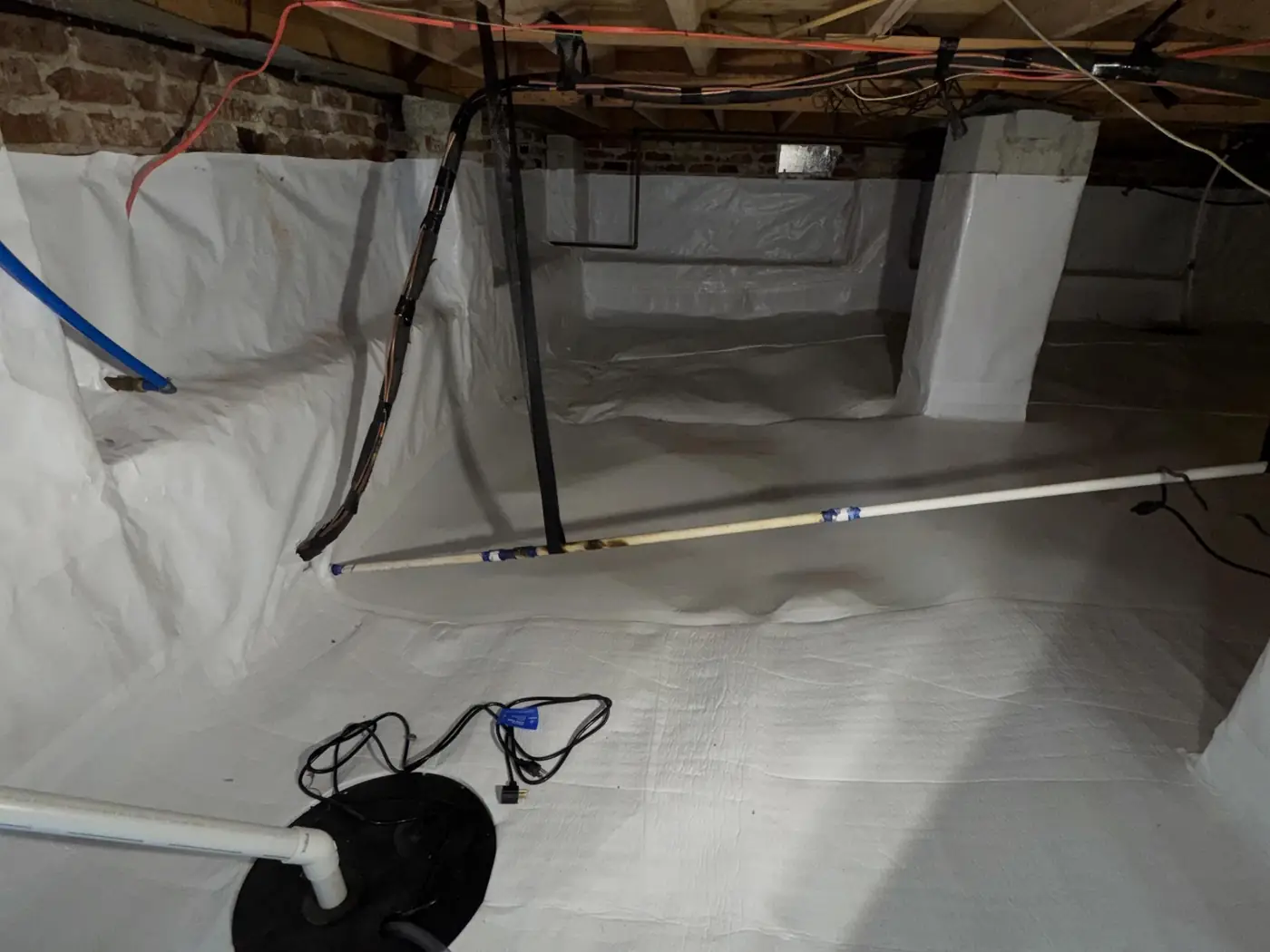
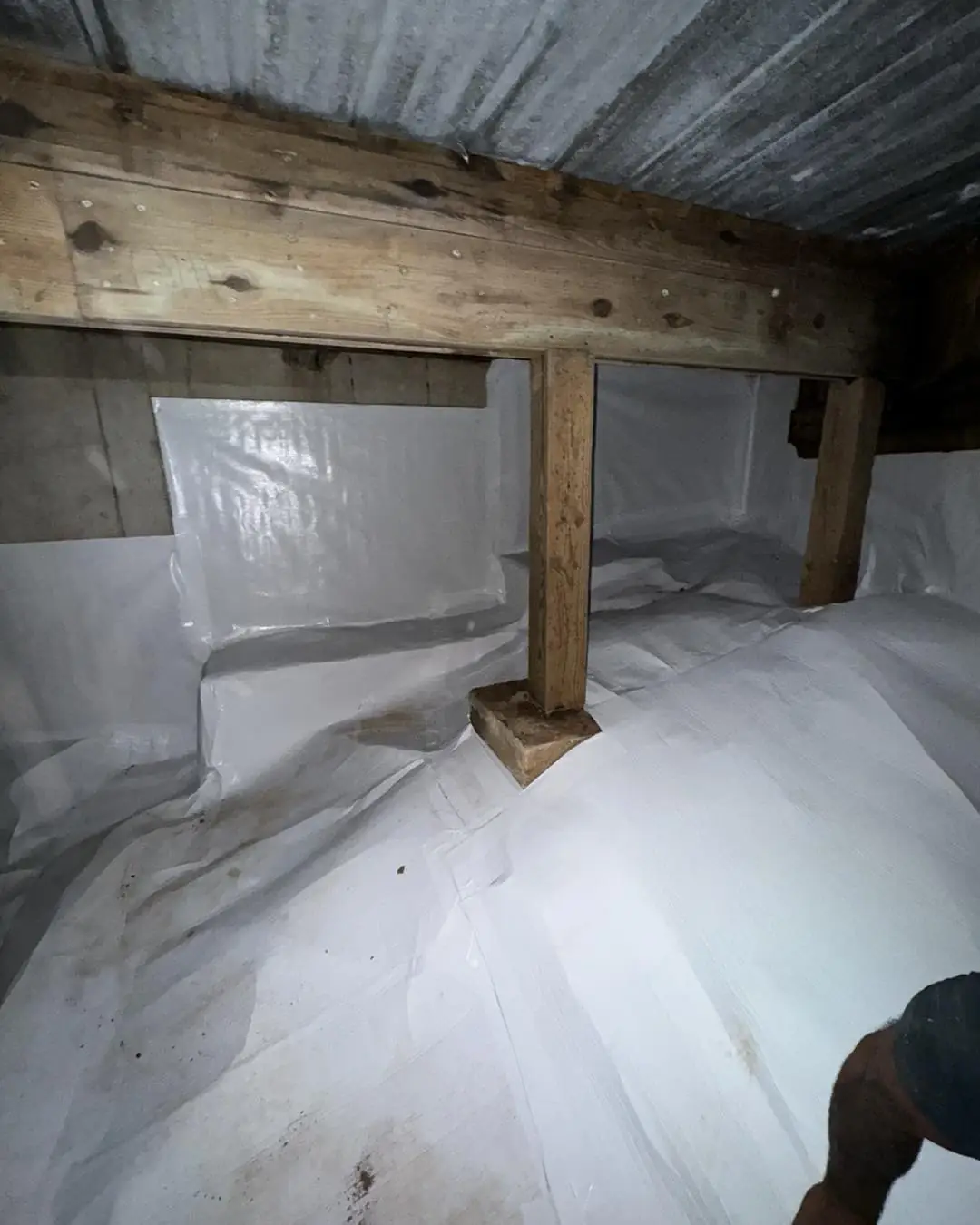
The ground and the foundation walls get covered with a thick, reinforced liner. That's a big step up from the thin plastic most builders lay down. The seams are taped, the liner runs up the walls and is fastened and sealed, and it's wrapped around every pier so there are no gaps for ground moisture to sneak through.
Sealed vents and a sealed door
The foundation vents get closed and sealed, along with gaps around pipes and wires. The access door gets replaced or sealed so it stops letting humid air in.
A crawl space dehumidifier
Even a sealed crawl space picks up moisture from the ground, the block walls and the house above, so in Georgia a dehumidifier is part of the system, not an add-on. We size it to the space and set it to hold humidity in a safe range all year. It runs on its own and drains automatically. Read more about dehumidifiers and how they work.
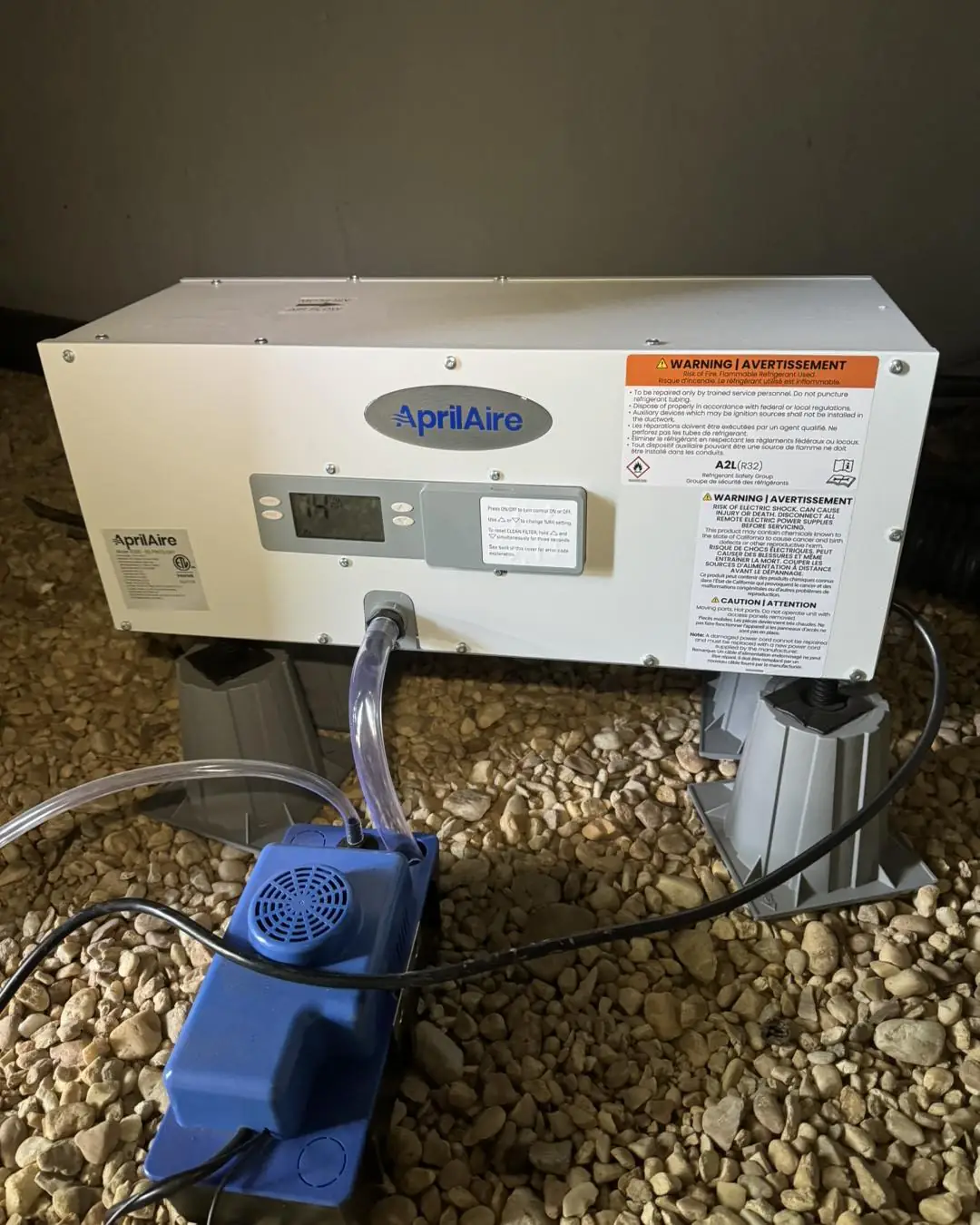
Skip any one of these pieces and the system doesn't do its job. A great liner with open vents still lets humid air in, and sealed vents without a dehumidifier can trap moisture instead of removing it.
Vapor barrier vs. full encapsulation
A lot of homeowners tell us, "I already have a vapor barrier." Many Georgia homes do: a thin sheet of plastic laid loose on the dirt. It's better than nothing, but it's not encapsulation. Loose plastic shifts, tears and leaves the walls and piers exposed, and the vents stay open to outside air.
Full encapsulation treats the crawl space like part of the house. It's sealed, it's dry, and the air coming up into your living space is clean. If you're not sure which one you have, snap a photo through the access door and text it to us. We can usually tell at a glance.
What to expect when we do the work
Most crawl spaces take one to three days, depending on size, how much cleanup is needed and whether drainage goes in first. Everything happens under the house, so you can live in your home normally while we work. Expect a crew coming and going through the access door and a bit of noise, and that's about it.
When we're done, we walk you through the finished space with photos and show you how the dehumidifier works. Our encapsulation systems come with a lifetime warranty, and you get the written warranty terms with your quote, before any work starts.
Most homeowners notice the difference within a week or two. The musty smell fades, the house feels less sticky, and the AC stops running quite so hard.
Crawl space encapsulation near you
We're a local, family-run crew based in Woodstock, and crawl spaces are a big part of what we do. We work across Woodstock, Canton, Acworth, Kennesaw, Marietta, Roswell, Alpharetta, Cumming, Cartersville, Jasper, Dallas and the rest of North Georgia.
See our full crawl space encapsulation service, or browse recent projects to see the before and after on real jobs.
Get a free crawl space inspection
If any of the signs above sound familiar, we'll come out for a free inspection. We'll show you what's going on under your house, explain your options in plain English and give you a written quote. Call or text (470) 574-8323. If the fix is bigger than you planned, financing is available.