Woodstock is where PPS Waterproofing lives. Our shop is here, owner Jacob Powers runs the company from here, and when you call about a damp crawl space in Woodstock, we are usually only a short drive from your driveway.
That means quick inspections, and it also means we know this town's crawl spaces well. Below is what we tend to find under Woodstock homes, how we fix it, and a real job we finished here.
Why Woodstock crawl spaces take on so much moisture
Woodstock has two very different kinds of housing, and each one has its own crawl space story. Around downtown Woodstock you find established homes, including plenty of older ranches sitting over vented crawl spaces with bare dirt or a thin layer of tired plastic. Out along Towne Lake Parkway and Highway 92, the subdivisions are newer, and many of those homes have finished basements instead.
The older ranches tend to have damp, musty crawl spaces. The newer builds more often call us because a finished basement is taking on water. Both problems usually trace back to the same source: the land.
A lot of Woodstock lots slope toward the Little River and the creeks that feed Lake Allatoona. When a house sits on that kind of grade, one side of the foundation is fighting runoff every time it rains. Water moves downhill through our red clay, which holds it for days and then lets it go slowly as vapor right under the floor.
Then summer arrives. Vented crawl spaces pull in warm, humid Georgia air, and that moisture condenses on cooler ducts, pipes and framing. Wet soil below and wet air coming in through the vents is a hard combination for any crawl space to survive.
What to watch for in a Woodstock home
- A musty smell that gets stronger after rain or when the HVAC kicks on.
- Floors that feel soft, bouncy or out of level, especially in older ranches near downtown.
- Standing water or mud on the downhill side of the crawl space after a storm.
- Sweating ductwork, rusty straps or dripping pipes in July and August.
- Insulation hanging down or lying in wet clumps on the plastic.
- Dark spots or white fuzz on joists and subfloor.
One of these on its own is worth a look. Two or three together usually means the crawl space has been damp for a while.
A real Woodstock job: leveling the floor, then sealing the space
One of our Woodstock projects shows why we look at the whole crawl space, not just the moisture. The floors in this home were sagging, so the fix had to start underneath with the framing.
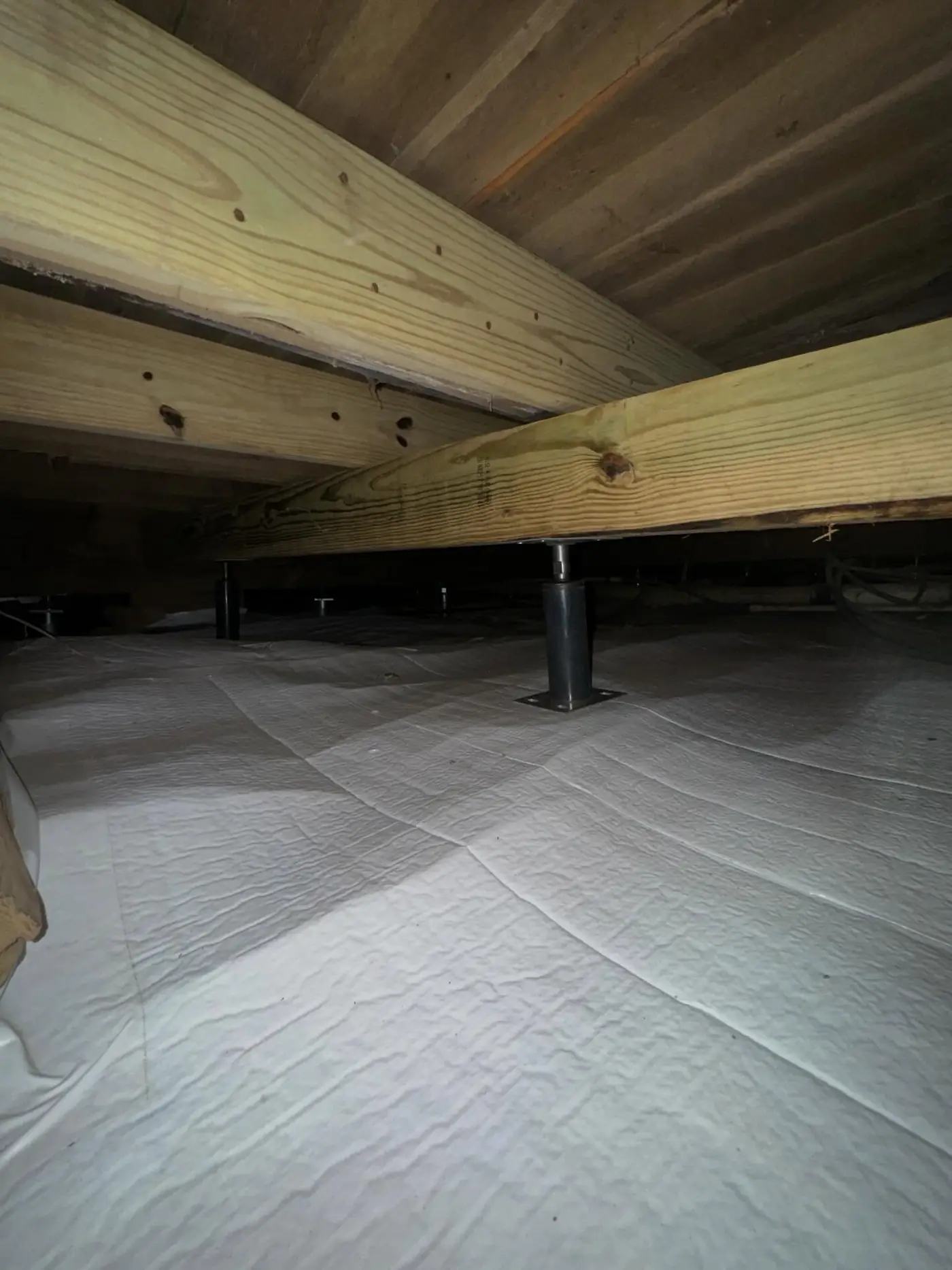
We started with the structure. Our crew installed 43 adjustable support jacks and 80 linear feet of new beams to bring the floor back to level. There is no point sealing a crawl space if the framing above it is still moving.
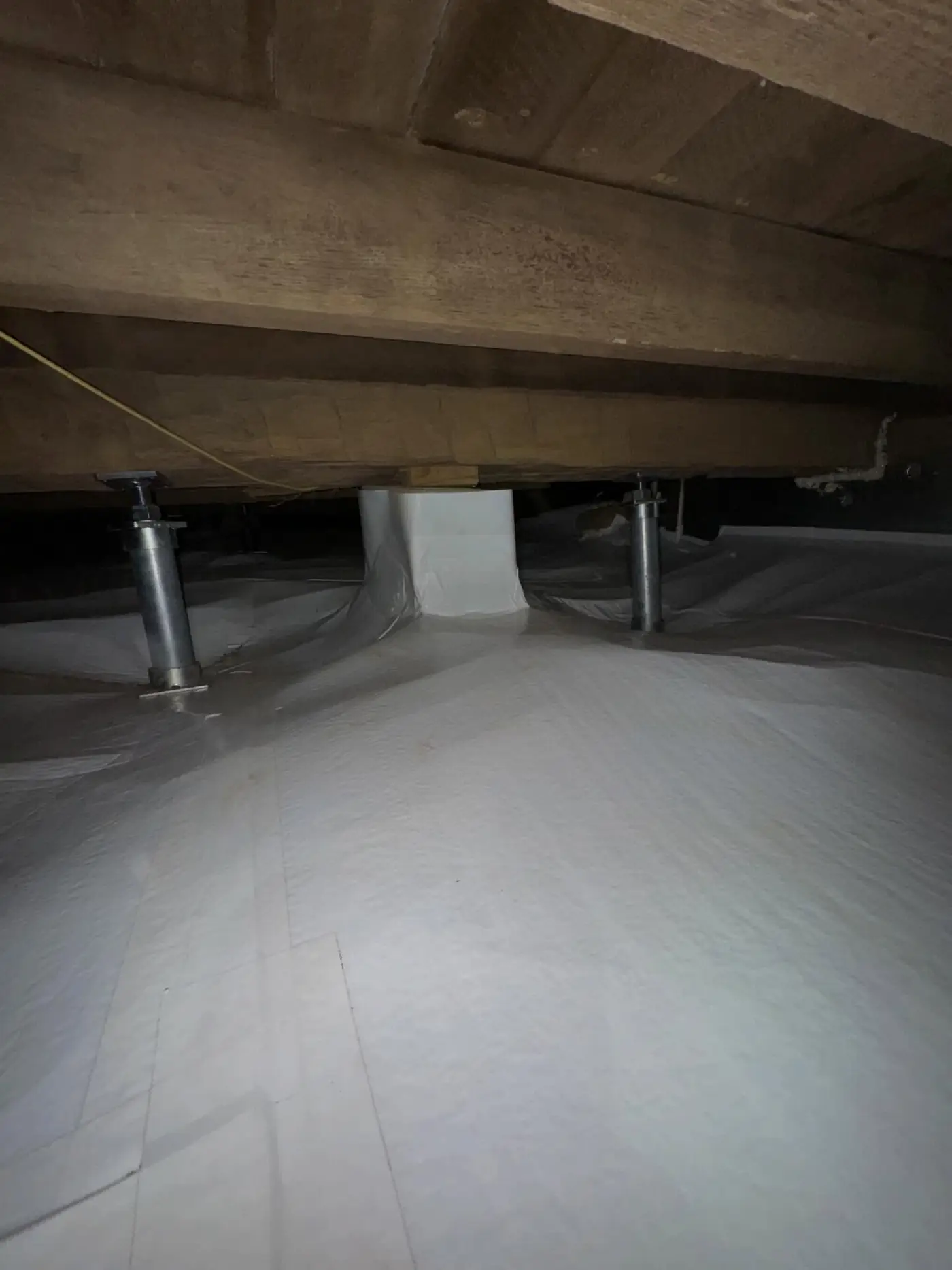
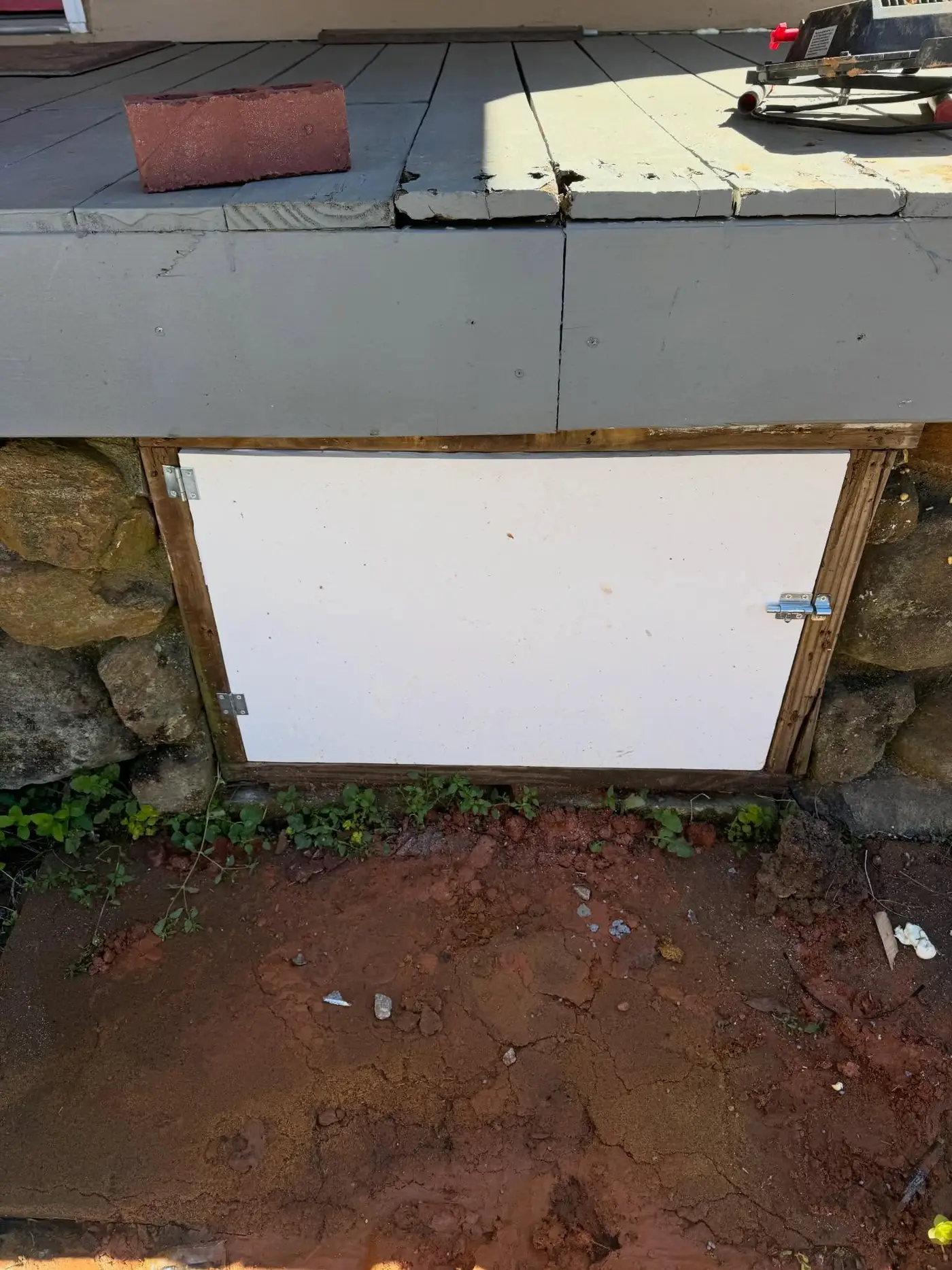
With the floor supported, we encapsulated the full 1,500 square foot crawl space. That included a sump pump to handle water, a sealed vapor barrier across the floor and up the walls, and two sealed access doors so outside air stays outside.
You can see more of our finished work on the projects page.
What goes into a PPS encapsulation
Every crawl space is different, but a full crawl space encapsulation from us generally includes:
- Cleaning out old plastic, debris and failed insulation.
- Handling water first, with drainage or a sump pump when the space floods or stays wet.
- Adding structural support when framing sags, as we did on the job above.
- Air sealing foundation vents, gaps and the rim joist where needed.
- Installing a reinforced vapor barrier on the floor and up the walls, with seams taped and piers wrapped.
- Installing a sealed access door.
- Adding a crawl space dehumidifier sized to the space.
The dehumidifier is what keeps the job working through a Georgia summer. The EPA recommends keeping indoor humidity below 60 percent, ideally between 30 and 50 percent, and a sealed crawl space with the right dehumidifier is how we hold it there.
Fixes that often go with it in Woodstock
On sloped Woodstock lots, the best crawl space job often starts outside. Downspouts that dump right at the foundation on the uphill side can send water straight into the crawl space. Underground downspouts carry that water away from the house before it ever reaches the footing.
In the older ranches, sagging floors are common enough that we check the framing on every inspection. When it needs help, our structural stabilization work uses support jacks, sister beams or piers. If we find mold on the wood, we can treat it before the space gets sealed.
Woodstock neighborhoods and nearby towns we serve
We work all over Woodstock in both 30188 and 30189, from the streets around downtown to Towne Lake and the neighborhoods off Highway 92. Our Woodstock service area page covers everything else we do here.
Because we are based here, nearby towns are a short trip too. We also serve Canton, Holly Springs, Acworth, Kennesaw and Roswell.
Get a free inspection from your neighbors at PPS
Jacob brings more than 20 years of experience to every crawl space we look at. Inspections are free, and you get a written quote that spells out the work and the lifetime warranty terms on the system. If you want to understand the cost side first, read our guide to how crawl space encapsulation is priced in North Georgia. Financing is available too.
Call us at (470) 574-8323 or request your free inspection online. We are right here in Woodstock, so it will not be long before we are at your door.